Love shack

I am back from holiday – hence the gap in posting. While away, I’ve had time to read several inspiring books, not least of which is The Shack by William P Young, a self-published novel that is bestselling in the USA and is generating much excitement here as well.

The book centres on Mack, a grieving father after his young daughter’s abduction and murder, who is invited by a typewritten note to meet God at an old wilderness shack that was the scene of the crime. Repulsed and yet inrigued, Mack makes the journey. Most of the remainder of the book describes his encounter when he arrives.

The story is not so much a straight novel as a series of conversations that explore life, faith, loss, the Trinity and so much more. The result is a fascinating mix of challenged perceptions coupled with a pervasive message that God’s love for Mack (and hence for us) is deeper, more earthy and more redemptive than most of us have ever considered. I found it stimulating and moving, and I couldn’t shake it off for days after finishing it. Some of it was a little cheesy, but all in all I’d recommend it to anyone, especially someone wrestling with the effects of tragic loss.

The Shack is published by Windblown Media and available from the usual places 🙂
Holier than thou?

On that day even the harness bells of the horses will be inscribed with these words: SET APART AS HOLY TO THE LORD. And the cooking pots in the Temple of the LORD will be as sacred as the basins used beside the altar. In fact, every cooking pot in Jerusalem and Judah will be set apart as holy to the LORD Almighty. All who come to worship will be free to use any of these pots to boil their sacrifices. (Zec 14:20-21a NLT)

Zechariah foresees a time when there will be no distinction between sacred and ordinary vessels. Even ordinary cooking pots can become holy objects, useful for service to God and as holy to him as any other.

One of the striking features about the New Covenant (see Jeremiah 31:31ff) is that it eliminates the division between those people who are specially dedicated to God and the rest of his people. Jeremiah spoke of a time where no-one is needed to be a priest over everyone else, saying “You should know God”, because all his people would know him. The prophecy in Joel 2:28 (repeated famously in Acts 2 at Pentecost) was that the Holy Spirit would be poured out on everyone – men, women, servants and masters, old and young. This is what Zechariah has also seen. And the apostle Paul picks up Zechariah’s imagery:

In a wealthy home some utensils are made of gold and silver, and some are made of wood and clay. The expensive ones are used for special occasions, and the cheap ones are for everyday use. If you keep yourself pure, you will be a utensil God can use for his purpose. Your life will be clean, and you will be ready for the Master to use you for every good work. (2 Timothy 2:20-21 NLT)

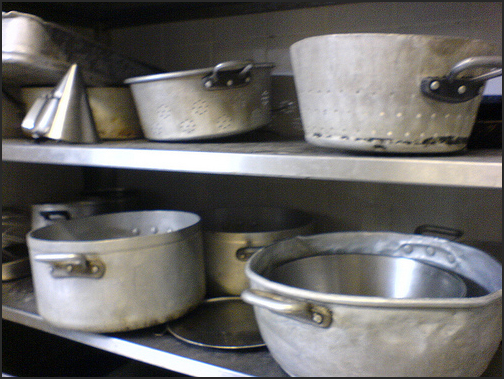
So let’s not count ourselves out! Nor should we flatter and inflate anyone who we feel is particularly sacred in God’s eyes. This is not to decry leadership or to mean we fail to recognise different gifts and abilities. But we must not insist that certain Christians are holier than others. We are all set apart for God, all holy – whether we feel like fine silverware or battered aluminium pans. We are New Covenant people: both ordinary and sacred. Thank you Jesus!

WWJD?

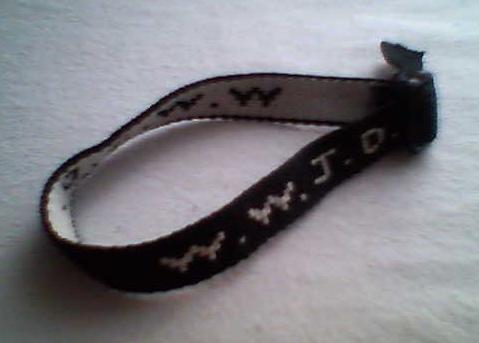
The WWJD bracelets have become well known even outside Christian circles in recent years. WWJD stands for ‘What Would Jesus Do?’. It serves as a visual reminder to Christians to think about their response to everyday situations. (My wife Jane wants me to wear one meaning ‘What Would Jane Do?’ – she’s convinced this would improve my life 🙂 ) In fact I had the silicone version and only wore it for a few days (anyone else find having a rubber band around your wrist annoyingly itchy?)

I think asking what Jesus would do is great. But it can suggest that Jesus is absent, long-gone, and we are trying to make decisions in his place. For me, it also contains a nugget of guilt – what ought you do right now to live up to what Jesus would have done? That’s a tall order indeed, and one liable to make me feel I am not measuring up.

Recently I have been rephrasing the bracelet: What WILL Jesus Do? This seems a much better way of looking at things. Jesus is not absent. Nor is he waiting to see if, through our own efforts, we can live up to his enormous expectations. Instead, he is in us, working through us by the same Holy Spirit that raised him from the dead (Romans 8:11). We are co-workers with him, not second-rate replacements for him. I have found this new way of thinking profoundly liberating. I might even dig that old bracelet out of the cupboard…